Legal Custody
Legal custody concerns the authority to make important decisions about a child's upbringing, including education, healthcare, and other significant matters.


You don't have to agree on every parenting decision before beginning mediation. The process is designed to help parents communicate, identify disagreements, and explore arrangements that consider their children's needs.
Discuss the parenting issues preventing you from reaching an agreement.
Create schedules and responsibilities that reflect your children's routines and both parents' circumstances.
Participate directly in decisions rather than leaving every unresolved issue for a court to determine.
Work through difficult conversations in a neutral, structured environment.
Consider how parenting arrangements may need to evolve as children grow and family circumstances change.
Parents seeking private mediation often have specific disagreements that need attention.
Discuss where children will spend their time, including weekdays, weekends, school breaks, and transitions between households.
Develop arrangements for birthdays, holidays, vacations, and other important family events.
Address school selection, transportation, extracurricular activities, and communication about educational matters.
Discuss how parents will communicate and participate in significant healthcare and other parenting decisions.
Establish practical expectations for sharing information, coordinating schedules, and resolving future disagreements.
Explore how a proposed move, new work arrangement, or other major change could affect parenting responsibilities.
At Adriatic Mediation, we understand that child custody and parenting disagreements require more than simply finding a compromise. They involve important decisions about your children's well-being, family relationships, and future.
We focus on creating a neutral, respectful environment where both parents can express their concerns, explore possible solutions, and work toward parenting arrangements that support their children's needs.
Tell us about the parenting disagreements you're facing and learn whether private mediation may be appropriate.
Clarify the decisions that need attention, including schedules, responsibilities, communication, or other concerns.
Participate in facilitated discussions designed to identify common ground and consider practical alternatives.
The mediator prepares a Memorandum of Understanding (MOU) or written summary documenting the agreements reached during mediation.
Discuss any remaining concerns and consider independent legal review or court procedures where necessary.
Parenting arrangements that worked previously may become difficult to maintain as family circumstances evolve.
Private mediation can help parents discuss:
Relocation: How a proposed move could affect parenting time, transportation, and communication.
Changing Work Schedules: Adjustments needed when employment hours or responsibilities change.
New Family Circumstances: Practical boundaries and expectations when household arrangements change.
Children's Evolving Needs: Reconsidering schedules and responsibilities as children grow older.
Where an existing court order is involved, parents may need appropriate court approval before changes become legally effective.
DISCUSS A PARENTING PLAN CHANGE
North Carolina parents making custody arrangements need to consider both important decisions about their
children and where their children will spend their time. Private mediation can help parents discuss
these responsibilities and work toward a practical parenting plan.
Legal custody concerns the authority to make important decisions about a child's upbringing, including education, healthcare, and other significant matters.
Physical custody concerns where a child lives and how parenting time is shared between parents, including daily routines, weekends, and holidays.
A well-structured parenting plan helps separated or divorcing parents establish clear expectations,
reduce misunderstandings, and provide greater consistency for their children.
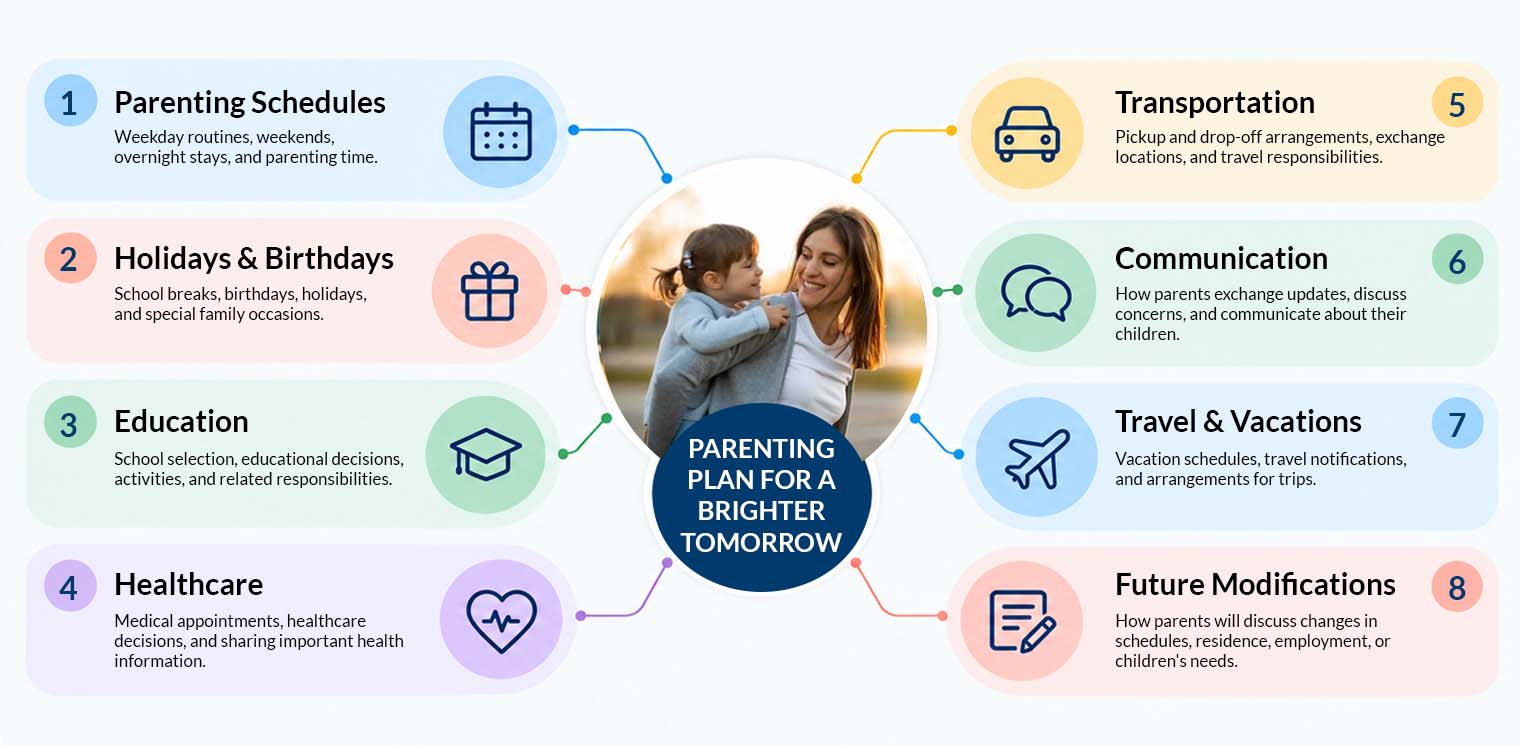
Private child custody mediation offers North Carolina parents a more personalized and constructive way to resolve parenting disagreements. Rather than allowing every disagreement to become a contested court matter, parents can work with a neutral mediator to develop practical arrangements that reflect their family's needs.
Arrange mediation sessions around work, school, and family commitments, subject to availability.
Discuss your family's unique circumstances and develop parenting arrangements that address your specific concerns.
Address sensitive parenting matters in a confidential setting, subject to applicable confidentiality rules and exceptions.
Work together to create parenting arrangements instead of leaving every unresolved decision to a judge.

Denise brings a combination of legal education, professional coaching, and alternative dispute resolution experience to Adriatic Mediation.
A North Carolina and Mississippi-licensed attorney and Certified Professional Coach, Denise has spent 19 years educating law students and attorneys. Her background helps her facilitate thoughtful conversations, manage disagreements, and guide parents toward practical solutions while maintaining neutrality.
Initial Consultation – Discuss your parenting concerns, understand the mediation process, and identify your immediate priorities.
Identifying Key Issues – Outline areas requiring agreement, including parenting schedules, decision-making responsibilities, communication, and other custody concerns.
Exploring Parenting Arrangements – Work through disagreements with the assistance of a neutral mediator and consider practical, child-focused solutions.
Documenting Agreements – The mediator prepares a Memorandum of Understanding (MOU) or written summary documenting the agreements reached during mediation.
Planning the Next Steps – Review the proposed arrangements and determine whether independent legal review or further court procedures are required.
North Carolina offers both private and court-connected custody mediation. Understanding the difference
can help parents make informed decisions about resolving custody and parenting disagreements.
Private mediation is voluntarily arranged by parents with a neutral mediator, such as Adriatic Mediation. It provides a personalized and flexible approach to discussing custody arrangements and parenting plans.
North Carolina has a court-connected custody mediation program for eligible contested custody and visitation cases. Participation is generally required before a custody trial unless the court grants a waiver or an exception applies.
Note: Choosing private mediation does not automatically replace court-required custody mediation.